
---
Who This Is For
If you ship lightweight apparel products (t-shirts, underwear, socks, scarves, light dresses, activewear) directly to consumers — especially if you're a DTC brand, online marketplace seller, or fast-fashion retailer — the shipping bag you choose affects your cost per order, unboxing experience, brand perception, and shipping weight. This guide covers how white kraft self-adhesive bags compare to poly mailers and when they are the right choice for your business.
---
What Are White Kraft Self-Adhesive Bags?
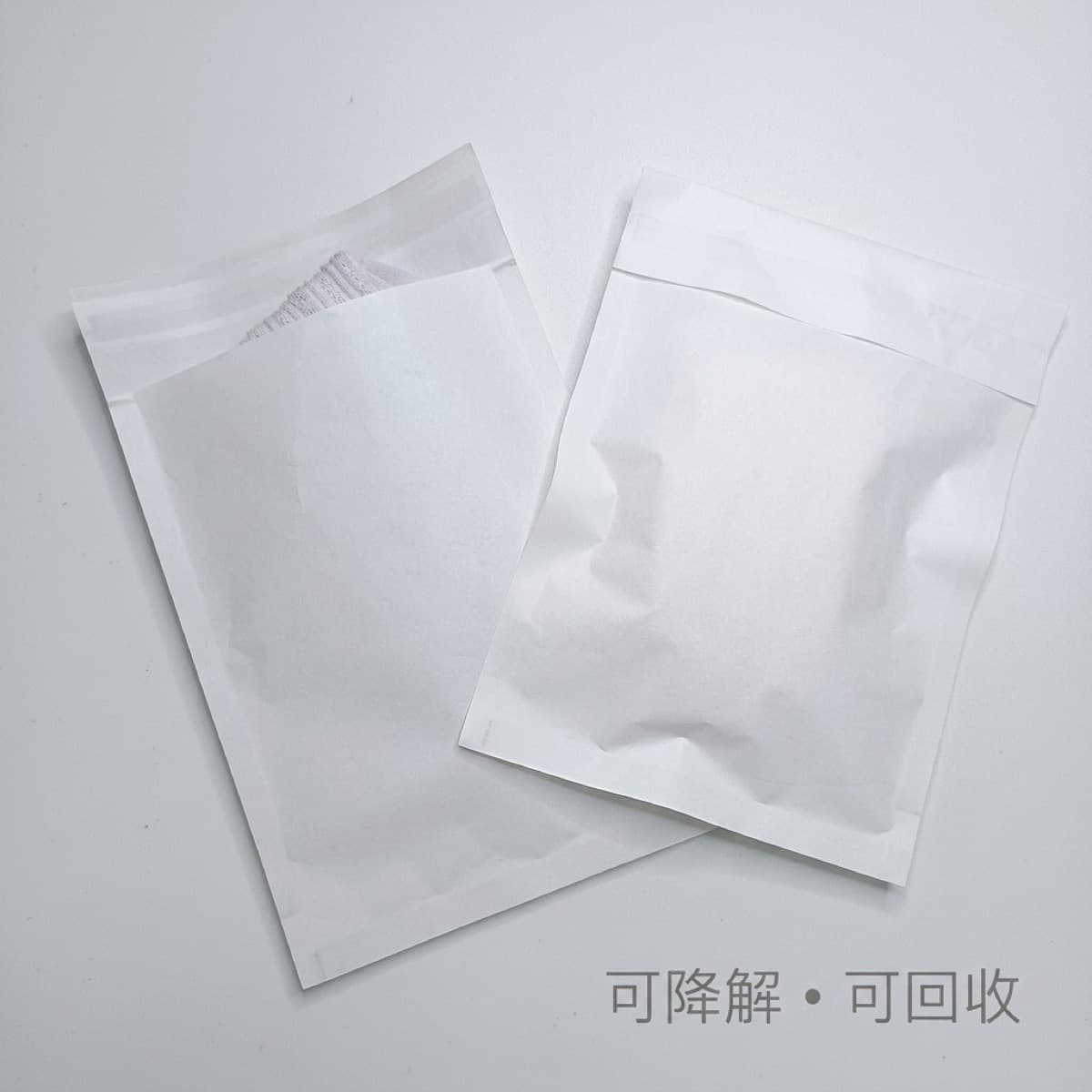
White kraft self-adhesive bags are made from bleached kraft paper with a pressure-sensitive adhesive strip along the top flap. The adhesive is activated by peeling off a release liner — no moisture, heat, or tools required. They function as both a shipping mailer and a retail-ready package.
These bags differ from kraft paper tubes and kraft paper pillow bags primarily in their closure mechanism and surface quality. The bleached white surface provides a clean, premium canvas for branding — ideal for brands that want the sustainability signal of paper without the rustic aesthetic of unbleached kraft.
Key Material Properties
| Property | Typical Value | Notes |
|----------|--------------|-------|
| Material | Bleached kraft paper, FSC-certified pulp | Virgin or recycled content options |
| Basis weight | 60–80 GSM | Thinner bags (50 GSM) available but less crush-resistant |
| Tensile strength | 1.5–2.5 kN/m (MD) | Sufficient for packages under 1 kg |
| Surface finish | Smooth, printable white | Accepts flexo, offset, and digital print |
| Adhesive type | Pressure-sensitive, hot-melt or acrylic | Non-yellowing formulation recommended |
| Color | Natural white (bleached) | Off-white/cream available from unbleached variants |
---
Standard Size System: P1–P5 Sizes
Self-adhesive paper bags follow a standardized P-series sizing system used across the packaging industry. Understanding these sizes helps you select the right bag and avoid over-ordering oversized material (which increases unit cost and carbon footprint).
| P-Size | External Dimensions | Suitable For | Approx. Volume |
|--------|-------------------|-------------|----------------|
| P1 | 14 × 24 cm (5.5" × 9.5") | Socks, underwear, small scarves | 0.4 L |
| P2 | 17 × 27 cm (6.7" × 10.6") | T-shirts (folded), bandanas, leggings | 0.8 L |
| P3 | 22 × 32 cm (8.7" × 12.6") | T-shirts, light dresses, 2× underwear | 1.5 L |
| P4 | 28 × 38 cm (11" × 15") | Folded sweaters, jeans (folded), dress shirts | 2.5 L |
| P5 | 32 × 43 cm (12.6" × 17") | Bulk orders, gift sets, heavy knitwear | 4.0 L |
Pro tip: Always order a sample kit to physically test the bag size against your folded garment. A bag that's 5 cm too wide adds unnecessary shipping weight and material cost. The goal is a snug but not tight fit — the bag should close flat with no bulging.
---
White Kraft vs. Poly Mailers: When to Choose Each
This is the most common procurement question. The answer depends on your brand positioning, target market regulations, and cost structure.
| Factor | White Kraft Self-Adhesive | Poly Mailer (plastic film) |
|--------|---------------------------|--------------------------|
| Material cost | Moderate (+20–40% vs poly) | Lowest |
| Sustainability perception | High — paper is recyclable, compostable, renewable | Low — plastic recycling rates are <10% |
| Water resistance | Moderate (unless treated) | Excellent |
| Weight | 30–50% heavier than equivalent poly | Lightest |
| Print quality | Matte, premium feel; 1–4 color flexo | High-gloss; up to 8 color flexo |
| Crush resistance | Good — semi-rigid paper body | Poor — crinkles easily |
| Re-sealability | Not typically re-sealable | Some versions with tear-and-seal strips |
| EPR/PPWR compliance | Favorable — paper attracts lower EPR fees in EU | Increasingly regulated under plastic EPR |
Bottom line: Choose white kraft when brand image and sustainability credentials are a competitive differentiator. Choose poly mailers when cost and weight are the primary drivers (e.g., high-volume, low-margin operations).
---
Print and Branding Options
White kraft's smooth surface makes it an excellent branding canvas. Options include:
- Flexographic printing (1–4 colors) — Most cost-effective for runs over 10,000 pcs. Water-based inks available for full recyclability.
- Sticker/label branding — Print your logo on a separate sticker and apply to the bag. Best for low-volume, high-variety operations.
- Rubber stamp — For small-batch, artisanal, or hand-packed orders. Adds a handmade, premium touch.
- Thermal transfer — Barcodes, shipping labels, SKU stamps. Often used in warehouse order processing.
Recommendation: For apparel brands shipping 1,000+ orders per month, single-color flexo printing (your logo on the flap or center) delivers the best balance of impact and cost. Multi-color is possible but adds significant unit cost and minimum order quantity.
---
Ideal Applications
| Product Category | Recommended P-Size | Notes |
|-----------------|-------------------|-------|
| Socks / Underwear | P1 | Stack 2–3 pairs per bag |
| T-shirts (fitted) | P2–P3 | Depends on size (S vs XL) |
| T-shirts (oversized) | P3–P4 | Bag may need to be opened for bulky items |
| Dresses (lightweight) | P3 | Hang-folded or flat-folded |
| Scarves / Bandanas | P1–P2 | Roll or fold |
| Leggings / Yoga pants | P2–P3 | Rolled or folded |
| Denim (light) | P4 | Heavy — consider reinforced adhesive |
| Gift sets (3+ items) | P5 | May require double-wall construction |
---
Buyer Verification Checklist
Before placing a production order, verify these 10 items with your supplier:
| # | Verification Item | Why It Matters |
|---|-------------------|----------------|
| 1 | FSC chain-of-custody certificate | Required for sustainability claims and EU compliance |
| 2 | Adhesive strip adhesion strength | Must exceed 0.8 N/cm to survive shipping vibration |
| 3 | Tear resistance (MD and CD) | Ensures bags don't split during transit |
| 4 | Print color match (Pantone reference) | Request a physical print sample on actual bag material |
| 5 | Moisture resistance (if shipped in humid climates) | Ask for hydrophobic coating option or barrier treatment |
| 6 | Weight tolerance per bag | Consistent weight matters for automated order processing lines |
| 7 | MOQ per size/color combination | Affects unit economics; lower for standard white unprinted |
| 8 | Lead time (production + shipping) | Typically 15–25 days production; factor in seasonal peaks |
| 9 | Recyclability documentation | Confirm paper and adhesive are compatible with paper recycling |
| 10 | Sample kit availability | Test with your actual folded garments before approving bulk |
---
Cost Considerations
White kraft self-adhesive bags typically cost 20–40% more per unit than equivalent poly mailers, but total cost is nuanced:
- Shipping weight premium: White kraft adds ~20–30g per P3 bag. At typical rates, this adds $0.01–0.02 per order — negligible for DTC brands shipping $30+ items.
- EPR fee savings: In the EU, paper packaging attracts lower EPR fees than plastic. For brands shipping 100,000+ units/year, this offsets 30–50% of the material premium.
---
Related Resources
---
Key Takeaway
For apparel brands that position sustainability as a core brand value — especially those serving eco-conscious consumers — white kraft self-adhesive bags are a practical replacement for poly mailers with tangible brand and compliance benefits. The material cost premium is real but manageable, and EPR savings in regulated markets make the total cost competitive.
Xiahong Packaging offers white kraft self-adhesive bags in all P-sizes (P1–P5), with FSC-certified pulp, OEM flexo printing (1–4 colors), and Sedex-audited production. Contact us at fly@chinapolybags.com or +86-592-5656669 for samples and volume pricing.