
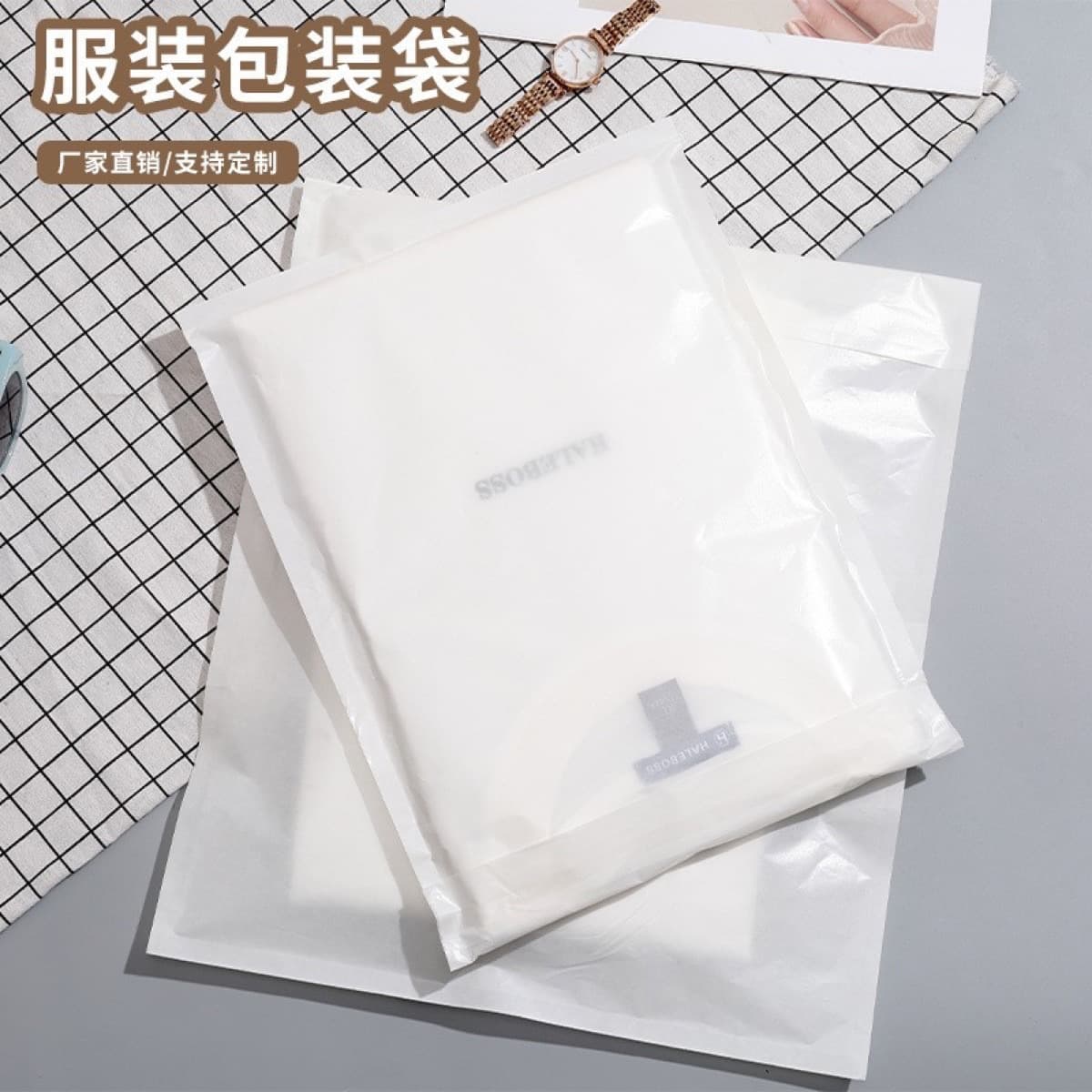
Oil-Wax Glassine Bags for Wool, Silk and Knitwear Exports: Beating Container Rain Without Plastic Lamination
Sea freight is the cheapest way to move apparel overseas, and one of the harshest environments a garment will ever sit in. Between the loading port and the destination warehouse, a sealed 40-foot container can generate more than a litre of water from thin air — repeatedly. For exporters of wool, silk, cashmere and knits, the difference between a saleable shipment and a total write-off often comes down to what touches the garment: a plastic film that traps humidity, or a breathable, oil-wax glassine layer that manages it.
Who This Guide Is For
Procurement managers at apparel brands, OEM/ODM factories packing natural-fibre garments, and logistics or QC teams that own export packing specs — especially anyone shipping on long-haul routes that cross climate zones or storing stock in humid coastal warehouses.
What Actually Happens Inside a Steel Box on a 30-Day Voyage
A container loaded at a humid port — say 30°C at 80% relative humidity — carries air holding roughly 24 grams of water vapour per cubic metre. As the vessel reaches cooler waters, the air's capacity to hold that water drops to around 9 grams per cubic metre. The surplus has to go somewhere: it condenses on the coldest surfaces, first as micro-droplets on the ceiling, then as actual drips — the phenomenon freight forwarders call container rain.
Three factors make apparel a high-risk category:
- Steel swings hard. Ceilings can exceed 60–70°C in midday sun and plunge overnight; each day–night cycle restarts condensation.
- The cargo brings its own water. Wool, cotton, silk and viscose carry roughly 8–12% moisture in the fibre, released gradually as temperatures climb. Cartons and wooden pallets add more.
- Mould needs little. Relative humidity sustained above roughly 60% is enough for mildew to establish on natural fibres — producing tide-mark stains, musty odours and, on silk, oxidation yellowing that no finish can reverse.
Freight-protection industry estimates put moisture damage at up to 10% of all containerised cargo worldwide — and prevention measures typically cost a fraction of one percent of cargo value.
Why a Clear Poly Bag Alone Doesn't Solve It
Most export garments are already polybagged, which creates a false sense of security:
- PE seals in whatever humidity was present at packing. If garments are bagged at a warm, humid production line, that moisture is locked against the fibre for the entire voyage — and condenses onto the garment when the container cools ("cargo sweat" at discharge).
- PE is a slow leak, not a barrier. Clear polyethylene has a moisture-vapour transmission rate of roughly 15–25 g/m² per 24 hours under tropical conditions, so vapour migrates through the film over weeks at sea.
- When water does get in, plastic keeps it there. If a carton wicks condensation, the film holds water against the garment for days — exactly what mould needs.
- Retail buyers are cutting plastic. Major importers are moving inner packaging away from single-use plastics.
The Recommended Product: Oil-Wax Glassine Garment Bags
Glassine is paper that has been supercalendered — compressed between heated rollers until the fibres lie flat and the sheet becomes smooth, semi-transparent, and naturally resistant to air, grease and moisture. A light oil-wax treatment raises water and grease resistance without sealing the sheet's breathability, so the bag sheds splashes and finger marks while still allowing slow vapour equalisation.
| Parameter | Specification |
|---|---|
| Material | Super-calendered glassine, FSC-certified wood pulp, ~30–40 gsm |
| Treatment | Oil-wax coating on one side (food-grade, PFAS-free) |
| Appearance | Translucent natural white; garments and SKU labels visible |
| Closure | Peel-and-seal release strip, gummed flap, or self-adhesive fold-over |
| Stock sizes | 15×17+5 cm to 40×50+5 cm; custom sizes on request |
| Print | Flap or surface printing, water-based/vegetable inks |
| End-of-life | Curbside recyclable with paper, biodegradable, plastic-free |
| OEM | Custom sizes and printing from low MOQs; ISO 9001/14001, Sedex-audited dual factories (Xiamen + Zhangzhou) |
One practical note: scan barcodes on the flap or an attached label rather than through the translucent sheet.
Where Oil-Wax Glassine Earns Its Keep
| Product | Typical damage mode | Recommended format |
|---|---|---|
| Cashmere & wool knits | Tide-mark staining, musty odour; loop structure holds moisture | Individual peel-and-seal glassine bag per folded knit |
| Silk blouses & dresses | Water rings, oxidation yellowing in humid storage | Acid-free tissue interleaf + glassine envelope |
| Leather & suede jackets | Grease marks, mildew on the grain | Oil-wax glassine wrap, coated side out |
| Deadstock / bonded storage | Mould above ~60% RH on natural fibres | Glassine bag + sachet desiccant in each carton |
| Uniforms & polos, tropical warehousing | Mustiness during months of port-side storage | Glassine bag, carton vented per warehouse spec |
Treat It as a System: The Four Moisture Layers
Inner bags are one layer of a defence that works only end-to-end:
- Cargo condition — pack garments at safe, verified moisture content; never bag straight off a humid line.
- Inner packaging — oil-wax glassine replaces the PE bag as the breathable, paper-based protective layer (see the oil-wax glassine garment bag range).
- Pack level — DMF-free silica gel sachets inside each carton, sized to enclosed volume (a common starting guideline is ~5 g per cubic foot).
- Container level — hanging calcium-chloride desiccant poles (roughly 6–8 per 20ft, 12–16 per 40ft as a general guideline), kiln-dried pallets (≤19% moisture), and a kraft floor liner against deck condensation.
Paper-based inner packaging also pairs naturally with container desiccants: unlike film, it does not trap the moisture those systems are trying to remove.
Quote-Request Checklist
- Fibre composition and target moisture content at packing
- Loading port, destination, transit days, and season (flag monsoon routes)
- Bag size matrix per SKU, with dimensional tolerance stated
- Oil-wax side, and the grease/water drop test you will accept on arrival
- Closure type — peel-and-seal, gummed, or reclosable
- FSC chain-of-custody paperwork and PFAS-free / REACH declarations
- Print spec and label placement (barcode readability through translucent stock)
- Paired desiccant spec: sachet gram weight per carton volume
- Pre-production sample sign-off including a humidity-chamber or field test
- MOQ, lead time, Incoterms, and batch traceability for claims handling
Related Reading & Pages
- Apparel brand packaging solutions — spec support from prototype to container load
- Custom packaging service — OEM sizes, printing, and material substitution reviews
- Capabilities & certifications — FSC, GRS, Sedex and ISO documentation
Next Step
Send your SKU size matrix and a typical shipping route; we will return a recommended glassine spec sheet with a matched desiccant guideline and samples to run on your own line — one of the lowest-cost insurance policies against a very preventable kind of cargo loss.
Produced by the Xiahong Packaging export team — two factories, 23 production lines, OEM from 500 units.